

The 6 Ds of Brenda Gatlin - Master of the Coaching Dance
By
Ron Pesch
MHSAA historian
September 30, 2021
She is remembered fondly as one of the greatest to ever coach in the Detroit Public School League and the State of Michigan, yet you won’t see Brenda Gatlin’s name among the leaders in all-time basketball victories. A search of the MHSAA List of Girls Basketball Champions displays her name only once.
You will, however, find Gatlin’s name in one most unexpected, yet fitting place.
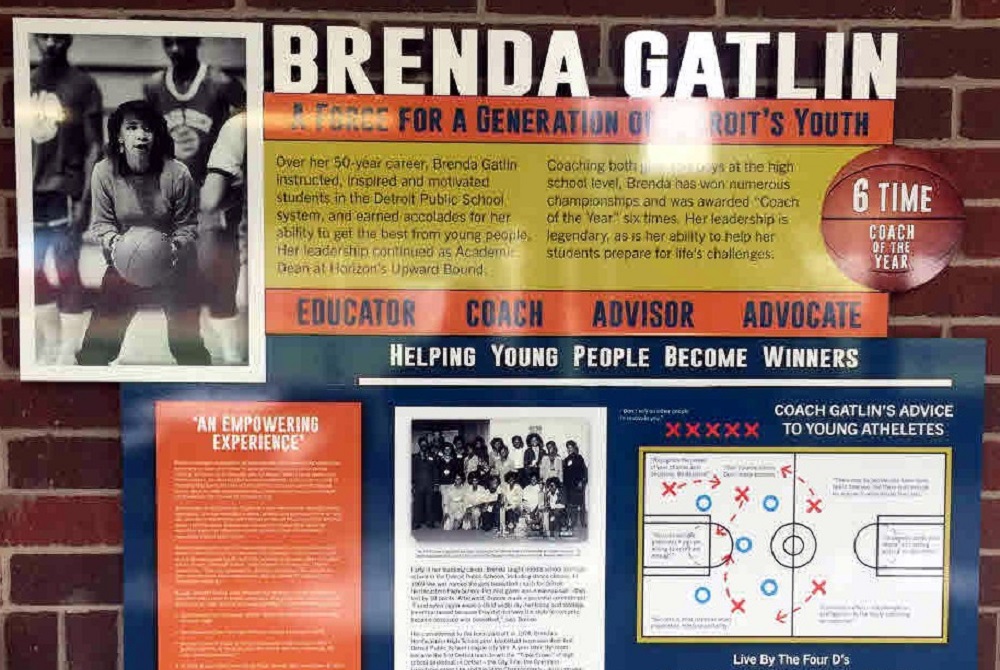
The Corner Ballpark, the redevelopment of the site of historic Tiger Stadium – located at Michigan and Trumbull in Detroit’s Corktown neighborhood – includes the Hank Greenberg Walk of Heroes. Opened in 2019, the “exhibit features 12 stories of Michigan citizens who displayed character, innovation and trailblazing spirit in the sports field and the community at large.”
The Corner tribute, as one might expect, includes Tigers greats Greenberg, Hank Aguirre, and Willie Horton. Norman ‘Turkey’ Stearns, a baseball Hall of Fame member and legend with the Detroit Stars of the Negro League is another honoree.
Mixed in with the other eight is Gatlin. The honor is most deserved.
Champion in Life
Gatlin never expected to coach basketball.
“I was a dance teacher,” she told The Southeastern Jungaleer, a public forum for the students and community of Southeastern High School published in the Detroit Free Press in 2009 at the time of her retirement after 43 years in public education. “Early in my teaching career I was asked to coach. I knew nothing about basketball.”
The daughter of a gifted clarinetist, who taught at Lincoln University then left for Virginia State College (VSC) where he became the Head of the Music Department, Gatlin was born in Jefferson City, Mo., to Dr. F Nathaniel Gatlin and his bride, Mildred Pettiford Gatlin, an elementary education teacher and reading specialist. The family moved to Petersburg, Va., when her father accepted a position at VSC. Brenda graduated from segregated Peabody High School – the earliest publicly-funded high school for African Americans in Virginia.
“Dad was strict and no nonsense – mom, nurturing and loving,” Gatlin recently recalled of her parents. “Dad was loving also, but his life was filled with so many trials and tribulations. It would take too much time to explain. He graduated from Oberlin Conservative College of Music, Northwestern University (master’s), and Columbia University (doctorate). Mom graduated from Lincoln University (bachelor’s) and VSC (master’s).
 “I, of course, did not want to attend Virginia State because I grew up on the campus. My dad insisted, ‘If it is good enough for me to work here, it is good enough for you to attend.’ I started out as an English major my freshman year and changed to health and physical education with a focus on dance. They did not have a choice of dance as a major.”
Brenda began teaching in Detroit at Barbour Middle School in 1966: “I started my tenure with Detroit Public Schools immediately upon graduating.”
“When I came to Detroit, I only planned to stay here three years. But I fell in love with the city,” she told the Free Press in 1976.
Her next career move was to Detroit Northeastern for the 1969-70 school year.
“I went to the Office of Human Resources and they had an opening at Northeastern high school for a Health and Physical Education and Dance Teacher. All of my classes were dance. I was elated. … My love was always Ballet, and Modern Dance,” she said. “At one of our department meetings, Norm Morris, Department Head, said we need a girls’ basketball coach.”
Both programs were long-established athletic department activities with histories that dated back decades at the school, once located on Detroit’s Lower East Side.
“I was in the midst of creating a choreography for the ALL-City Dance Concert that had been scheduled. Mr. Morris knocked me for a loop and said, Ms. Gatlin, you will coach the girls’ basketball team …” she recalled.
“I never in my wildest dreams ever thought that I would have to coach any sports, especially girls basketball.”
Making of a Coach
As a health and physical education major, Gatlin had played some intramurals and learned about sports mechanics, policies and procedures, and rules and regulations while in college.
“I was familiar with the 6-player rule, but the year I started coaching, the rules for girls had changed from 6-on-6 with a roving player to 5-on-5 with unlimited dribbling” she said. “Well needless to say, I choreographed my plays; I knew about movement. I studied the game as much as possible, but my focus was on dance.
“(I)n our first two seasons, we played only five games (each season),” she said to the Free Press, remembering those days when the girls played only against other Detroit city schools.
“The home team (supplied) oranges at half time, and cookies and milk for a social after the game,” she said recently, describing a completely different era. “You can imagine those girls scrapping and running down the court and then having to sit with the opposing team at the end for a social.”
In 2002, she recalled her opening contest as a coach for Lorne Plant at State Champs: “(Our opponent) proceeded to beat us by about 30 points.”
That game was a turning point.
“When we hosted Central high school, under the coaching jurisdiction of Doris Jones, everything changed. … I greeted Coach Jones. Without a greeting, she immediately said, ‘Where is the gym?’ I knew we were in big trouble.
“Sitting there watching my choreographed plays and movements … watching the determination on the faces of my girls – who looked over to me for answers, which I had none, watching my girls continue to fight and battle, even though they were down by 30 points, changed my life and focus. They just didn’t have the skills to compete. I vowed at that moment, ‘no students under my tutelage would be demoralized or embarrassed because they did not, at least, have the skills to compete.’ That game did it, and I owe it all to Coach Doris Jones. I rolled-up my sleeves and got to work.”
Title IX
The advent of Title IX meant things were changing in girls athletics all over the country.
“I remember attending myriad meetings at Wigle Recreation Center with other Detroit female physical education teachers. (At that time, women were the only ones allowed to coach girls in athletics in Michigan). The purpose of the meeting was to discuss whether girls should adopt the same 10 game schedule as the boys,” she said. “Some of the older coaches, and teachers had comments like: ‘This will be too difficult on the female body … studies show that the female uterus will drop if girls are allowed to run up and down the court for any length of time.’ We had to sit and listen to comments such as that. However, we voted that girls should be provided the same opportunities as boys. I suppose Christine Whitehead, Assistant Director of Athletics, provided Dr. Robert Luby (director of the Department of Health, Physical Education, and Safety for Detroit Public Schools from 1962 to 1983) with our sentiments. With Title IX it was a given. Some people still fought it.”
“Subsequent to the fiasco with Central, I had commenced the process of enhancing my knowledge of the rules and skills inherent in the game of basketball defensively and offensively. I discovered (UCLA coach) John Wooden’s books. His books became sort of my ‘Basketball Bibles.’ I became obsessed with the game. I woke up with basketball, went to sleep with basketball.
“And further, the recreation centers were sending us players who had some experience with the game. The Catholic Schools had a feeder program. We did not. So, my hat goes off to Virginia Lawrence and her sister Evalena, Coach Curtis Green, and many others who taught girls at an early age the skills of basketball.”
With the arrival of the federal law, the MHSAA sponsored its first girls basketball tournament in the fall of 1973. Gatlin’s Falconettes were ready.
Led by Hazel Gibson and the talented Williams sisters (Annette, Helen, and Shelia), they were now among the top teams in Detroit.
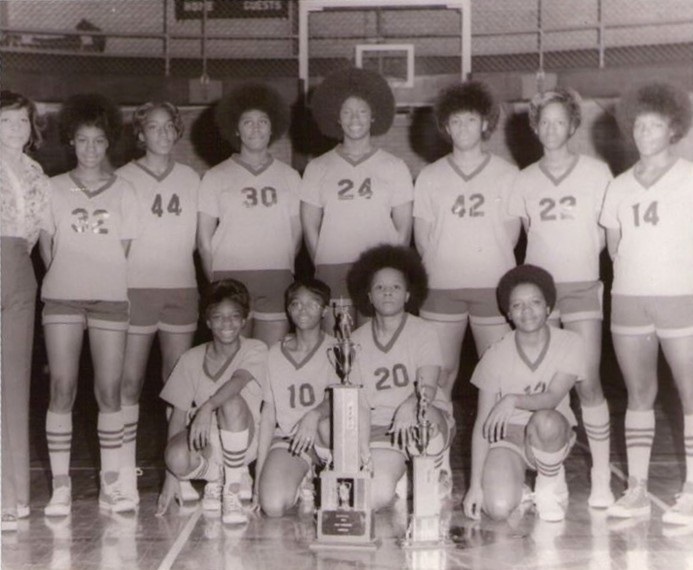 The team advanced to the Class A Regional Finals, falling to eventual state champ Detroit Dominican. All-city selection Sheila Williams, a sophomore, scored 26 points and pulled down 26 rebounds to lead the Falconettes.
In 1974, Northeastern trounced Murray-Wright, 73-27, winning its first Public School League (PSL) regular-season tournament before 500 fans at Wayne State University’s Matthaei Building. Gatlin’s team again ran into Dominican in the MHSAA Tournament, this time in a District Final. The Williams sisters combined for 61 of the Falconettes’ 71 points but fell 74-71 in a foul-filled game.
The defeat was Northeastern’s only loss in 16 games. Senior Lynn Chadwick posted a career-high 28 points to lead Dominican, which would repeat as Class A champ.
“Girls will play their heart out for you,” Gatlin told the Free Press following the season, “if they believe in you and if you treat them fairly.”
Postseason reward came in 1975 when Northeastern topped Dominican in the MHSAA Semifinals, 75-69, then defeated Farmington Our Lady of Mercy, 67-62, to earn the Class A title. Helen Williams scored 31 in the championship game, while Shelia added 20.
“Everybody knows about Shelia and Helen,” Gatlin told the press, “but it was the defense we got from our guards that did the job for us in the second half. We switched from a zone defense to our press and that made the difference.” Northeastern ended the year with a perfect 20-0 record.
Gatlin spent two more seasons at Northeastern before moving on to newly-opened Detroit Renaissance in the fall of 1978.
College Calls
“In 1978, I was asked to teach in a new examination high school,” continued Gatlin, “Renaissance High School (located at Old Catholic Central School). I hesitated because transferring to Renaissance meant no coaching, for Renaissance would not have an athletic program. It would be strictly academic. I enjoyed the fact that I was a part of the planning process in developing plans for the opening of a new school. The whole Renaissance situation was controversial, because many thought Cass (Tech) was enough. The rest is history. Our students were only able to participate in an intramural program, and I taught dance.”
There, she received a call from the athletic director at University of Michigan-Dearborn. Roy Allen, the associate director of health and education for the Detroit Public Schools, had passed on her name as a possible candidate to lead Michigan-Dearborn’s girls basketball team.
“I was able to juggle my teaching responsibilities at Renaissance with my coaching responsibilities at Michigan-Dearborn,” she said. But balancing the coaching duties would become more challenging as time moved on.
 “It became even more difficult as the distances of scheduled games became further and further. We were only provided a van that my Assistant Coach and I had to drive. Returning so late and trying not to short-change my students at Renaissance became even more difficult.”
Return to the PSL
“In 1981, Dr. Remus, the first principal of Renaissance who convinced me to transfer from Northeastern, was asked to become the principal of Cass Tech. Cass was experiencing some issues that they felt Dr. Remus could clear up,” Gatlin said. “Shirley Burke, the successful girls basketball coach at Cass, was stepping down. Cass also needed a dance teacher. Therefore, Dr. Remus said, ‘Ms. Gatlin, I need you at Cass.’ I think I was ready to get back to the high school level. I learned so much more coaching on the collegiate level and had grown extensively. Coach Burke left me with great players.”
When a teacher’s strike in the fall of 1982 threatened the Lady Technicians’ basketball season, Gatlin and her players petitioned Detroit school superintendent Dr. Arthur Jefferson for equal treatment that was afforded the Detroit PSL prep football teams.
“Coaching staffs at Detroit’s 21 high schools have volunteered to continue the football program after hours despite a three-week-old strike,” wrote Joyce Walker-Tyson in the Free Press. “Schools must play a certain number of games to be eligible for tournaments. While there is no similar requirement for girls’ basketball, Title IX … calls for equality in boys’ and girls’ athletics.
“During the teachers’ strike, (the girls were) the ones who went down to talk to the board (of education) all by themselves,” Gatlin told the Free Press’s Mick McCabe
When all 21 of the girls high school coaches volunteered their services, the girls season was saved, although it started late.
Her 1982 team upset No. 2-ranked Trenton in the Regional Final before advancing to the Class A Quarterfinals and falling to Farmington Mercy 38-34 in a thriller.
The season marked the first of three straight PSL championships won by Gatlin’s teams. At Cass Tech she developed a number of all-city and all-state players, including Pamela Dubose (Iowa/Wayne State), Kendra McDonald (Western Michigan), Nikita Lowry (Ohio State), Adrianne Smiley (Ball State), Clarissa Merritt (Ferris State), Sonya Watkins (Houston) – whose father Tommy had been a running back for the Detroit Lions from 1962-67 – Wendy Mingo, Savarior Moss, Yvette Walters, and others.

Expanded Responsibilities, Greater Influence
In the fall of the 1984-85 school year, Gatlin was asked to also coach Cass Tech’s boys team.
“I looked at my staff and hired the best possible person,” said Jeannette Wheatley, Detroit Cass Tech principal in September 1984. “Brenda is an excellent teacher, and she is a marvelous motivator.”
“I see it as a challenge for all female coaches,” Gatlin said to McCabe after the announcement. “But the men have been doing a dual role for years. The Xs and Os are Xs and Os. Basketball is basketball. Outside the strength factor, it’s the same game.”
Gatlin at Cass Tech, Kathy Curtis at Colon, and Carol Brooks at Burr Oak were all in charge of boys varsity teams that winter. They are believed to be the first to do so in Michigan.
She took the job for a year, but delayed her start. The beginning of the boys schedule in 1984 overlapped the girls postseason. (Prior to the 2007-08 school year, girls basketball was played in the fall in Michigan.) Gatlin didn’t want to shortchange her girls.
The Lady Technicians finished with 22 wins against 4 losses that season, advancing to the Class A Semifinals before falling to eventual champion Flint Northwestern. So it was mid-December before she returned to the boys team for the fourth game of the season, a 60-58 win. A young team, Cass Tech finished 10-9 on the year.
Back in 1974, Gatlin told Hal Schram of the Free Press that she wasn’t sure she wanted to spend the rest of her life coaching basketball.
“You have to be a psychologist, a coach and a sociologist to get the complete job done,” she said.
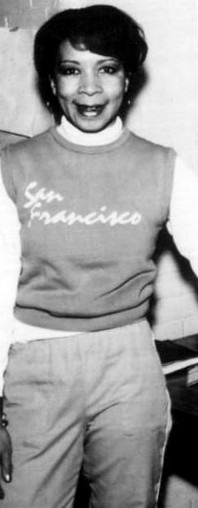 She continued coaching the girls at Cass Tech in the fall of 1985. Then an opportunity came in 1986 to move into administration and serve as athletic director at Detroit Southwestern. She took the job, as it offered an opportunity to make impact on a larger scale. There, she also taught modern dance.
In 1992, she moved back to Cass Tech, now as an assistant principal. She became principal at Southeastern in 1999, where she stayed until her retirement.
Determination
Today, she continues to practice her belief in the potential of the human being, working with Cranbrook schools and their Horizons-Upward Bound Program as academic dean. There, she helps students from the Detroit metropolitan area who have limited opportunities to enter and succeed in college.
Her life has always been built around four Ds.
“I still use it even with my students in the Cranbrook Horizons-Upward Bound Program,” she said. “When I use the Ds with Basketball, it becomes five Ds: Determination, Dedication, Desire, Discipline, and Defense.
“My players knew that defense wins games; it’s the name of the game. Offense is for the spectators. Defense is for the win. Our chant in our huddle always ended with, ‘The name of the game?’ They would respond with ‘Defense!’ This would be recited several times in the huddle prior to them taking the floor. My players knew that the most important ‘D’ other than defense is discipline.
“... I may have adopted it from my dad. I also used his quote, ‘The difference between resting on the bench and rusting on the bench is u.’ There were a few others.
“You can be dedicated, you can have the determination and the desire, but if you don’t have the discipline, success may not happen.”
The Sixth ‘D’ - Drive
“I get my determination and drive from my dad. My mom was very mild mannered. They were an awesome couple and a great parental balance for my brother Nat and me,” she said, and that drive – the need to teach – remains strong.
“I can’t stop.”
 Ron Pesch has taken an active role in researching the history of MHSAA events since 1985 and began writing for MHSAA Finals programs in 1986, adding additional features and "flashbacks" in 1992. He inherited the title of MHSAA historian from the late Dick Kishpaugh following the 1993-94 school year, and resides in Muskegon. Contact him at [email protected] with ideas for historical articles.
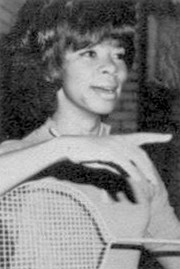
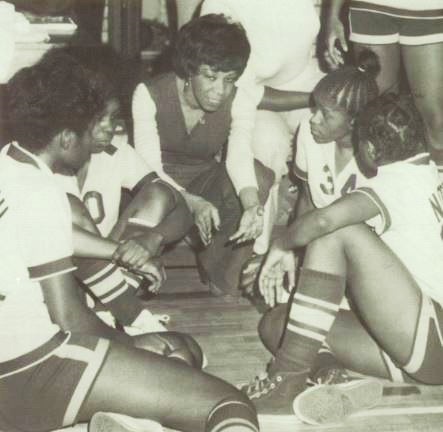
PHOTOS (Top) Brenda Gatlin is among honorees at Detroit’s “Walk of Heroes” display. (2) Gatlin’s first high school position was at Detroit Northeastern, here in 1971. (3) The 1974 Falconettes pose with their first Public School League trophy. (4) Gatlin huddles with the team in 1976. (5) The 1983 Cass Tech team: (Kneeling, left to right) Kim Justice, Ursula Gordon, Andrea Shaw and LaTrece Owens. (Standing, left to right) Coach Brenda Gatlin, Adrienne Smiley, Clarissa Merritt, Wendy Mingo, Kendra McDonald, Nikita Lowry, Kim Wells and Kathy Scates. (6) Gatlin left Cass Tech in 1986 to become athletic director at Detroit Southwestern. (Photos gathered by Ron Pesch from multiple school yearbooks.)

Hoping to be 'Hardly Noticed,' 50-Year Official Allen Certainly Recognizable, Respected
By
Mike Dunn
Special for MHSAA.com
December 18, 2025
Editor's Note: An extended version of this article appeared originally in the Cadillac News in March. Since then, Allen has been inducted into the Basketball Coaches Association of Michigan's Hall of Honor in October and is wearing the striped shirt again this basketball season, officially his 50th year.
CADILLAC – Bill Allen’s story is similar to that of many area sports officials, particularly those officials who have been active for many years.
A background in sports, typically playing team sports while growing up, combined with a desire to continue to be involved after high school or college, coupled with an inner urge to be part of the solution – these characteristics find a natural outlet for those brave souls who choose to be officials. and these traits are nearly always part of the make-up of the officials who receive high grades for their efforts and serve capably for many years.
Allen, of Cadillac, would not say this about himself. But he is one of those officials whom coaches are glad to see on the floor because they know they’re getting someone who will be fair and consistent. The same could also be said of Allen when he was umpiring, though he doesn’t work the diamonds anymore.
As Allen can tell you as he enters his 50th year wearing the striped shirt on the hardwood, officiating is a demanding vocation – and it is rewarding at the same time. It requires the right temperament as well as an above-average level of mental and physical fitness, especially as age makes its inevitable demands. It requires the ability to make decisions quickly, sometimes under very stressful conditions. It requires the ability to face criticism, sometimes expressed loudly or very loudly. It requires the ability to be a peacemaker at times and also the willingness not to hold grudges or become petty.
For those like Allen who have what it takes, those who are up to the challenges and the rigors that officiating requires from an individual, there is a deep satisfaction in knowing they are making a positive difference.
“I think that’s a common thread among all the officials, whether it’s basketball or baseball or softball,” Allen said. “You obviously want to do your best, but you want to manage the game in a way that helps it to flow the way it should flow and enables everyone, the players and the coaches and the fans, to get the most out of it.
“It’s an old cliché but it’s true: The best officials are the ones you hardly notice. If you can officiate a game and walk through the crowd afterward and no one recognizes you, then you’ve probably done your job pretty well that game. That’s what every official strives for.
 “You’re never going to get every call right, and you have to be willing to accept that going into it,” he added. “But you know the rules and apply the rules the best you can, you put yourself in the best position to make the calls, especially in basketball, and you call it the way you see it.
“Are you always right? No. But if you put yourself in the right position and make the call you believe is correct, you can live with that and normally the coaches can too, even if they’re angry about a particular call in the moment.”
Allen, like most officials, was an athlete himself growing up in Traverse City and playing multiple sports for what was then known as Traverse City High School, the largest high school in Michigan in the early 1970s. By his own admission, he wasn’t one of the top stars in basketball and baseball but he was a good, reliable player for his coaches and a dependable teammate who loved the atmosphere of the arena during each season as well as the sense of achievement that the act of competing brought out in him like nothing else.
“I was pretty athletic growing up, but not a great athlete at Traverse City High School,” he said. “I was good enough to make the teams, but I wasn’t what you would call an impact player. A lot of officials have the same kind of background as mine. Maybe we weren’t the greatest players, but we still enjoy sports and we like being part of the action.”
It was during his final two years at Michigan State during the mid-1970s that Allen received his start in officiating.
“In my junior year at Michigan State, one of the fellows I roomed with did assignments for the intramural programs at the college,” he said. “Everything from touch football to basketball to slow-pitch softball. He told me to take the officiating class and he would assign me to games, and that’s how it all started 50 years ago.”
Allen jumped into the world of officiating eagerly with both feet, working a sporting event “nearly every night” at MSU.
“I would go to school during the day, ref at night, and do it again the next day,” he recalled.
“There were so many contests, maybe thousands, that I got to work with a number of other officials. Tim McClelland, who later became a Major League umpire and made the illegal pine tar bat call against George Brett, was a colleague back then. It was a lot of good experience and good mentoring and laid a great foundation for what turned out to be ahead.”
Allen initially earned a degree in criminal justice, graduating from Michigan State University in 1977, and worked in the field of corrections for a period of time before his love of baseball and a sense of personal confidence in his potential to officiate at a higher level prompted him to attend a school for prospective umpires in Daytona Beach, Fla.
That didn’t quite work out, but Allen was not deterred. He changed his career plans from criminal justice to education, and the switch would also lead to abundant opportunities for officiating down the road not just on the baseball and softball diamonds but the basketball court as well.
“When I didn’t get picked (for umpiring), I went back to school to earn my teaching certificate and a graduate degree in history with the goal of becoming a teacher at Cadillac,” he explained. Allen’s wife Sue already was employed as a teacher with the school district.
Bill’s goal at that point was to join Sue as a member of the faculty, as a social studies teacher, and that’s just what happened. Bill served for 26 years in the classroom before retiring along with Sue 12 years ago.
“I viewed Cadillac schools as a great organization to work for as a teacher before I got hired there, and I was right,” he said. “I wouldn’t trade my years at Cadillac for anything. Susie and I both thoroughly enjoyed our years there.”
 In conjunction with teaching, Allen continued to officiate basketball in the winter and baseball in the spring and summer. He umpired a lot of men’s summer league softball games through the years and grew to love in particular working the games under the lights at Cadillac’s Lincoln Field.
He also became a registered official with the MHSAA and has continued in that role, though he decided to hang up his umpire cleats a few years ago.
“I registered with the MHSAA while I was still in Lansing,” he said. “The first place I ever did a sanctioned event was in Perry, Michigan. I had barely enough (umpiring) equipment and I’m sure I looked like a real yahoo out there, but I got through it.”
After coming to Cadillac, Allen met Dave Martin, who was an active official and a fellow teacher at Marion, and Martin became his first “crew chief.”
“They needed some JV officials and I got signed up and was off and running,” Allen recalled. “That’s how you got into it back then. You found a crew and the crew chief assigned you some games, and you were evaluated. As long as they liked you and liked what you were doing, they kept you around.”
Allen expressed admiration and appreciation for Martin and also the late June Helmboldt from Lake City, another crew leader “who had a great perspective on the game.”
Allen served as a crew chief himself for a long time and has built rewarding relationships with fellow officials through the years. He has worked many games with Penny McDonald of Cadillac, another longtime official who has earned much respect for her consistency and quality of work in multiple sports over the decades. Allen, in a reversal of roles, is the one receiving assignments from McDonald these days.
Bill Bartholomew is another longtime officiating partner with whom Allen has worked many games over the years and for whom Allen has great respect. This school year, in fact, marks Bartholomew’s 51st year as an official. There are a few others from northern Michigan who have stood the test of time and have passed the 50-year service milestone, such as Paul Williams of Mesick, Tom Post and Mike Muldowney of Traverse City, Tom Johnson of Gaylord, and Dan Aldrich of Charlevoix. All of these, Allen said, are a credit to the craft of officiating and have earned the respect they receive.
Allen also has fond memories of working frequently through the years with Don Blue of Falmouth and Jill Baker-Cooley of Big Rapids, who was chosen for the MHSAA’s prestigious Vern L. Norris Award in 2018.
“I was there when Don and Julie and Penny all got their start in officiating, and they all found their skill set and became excellent officials,” Allen said.
Bill is included in the 50-year milestone group of basketball officials now that the 2025-26 season is underway. He is pleased that he has been able to maintain his longevity; as to the future, he is ready and willing to keep going.
“As long as I’m healthy and can do it properly, I hope to continue,” said Allen, who remains physically fit, jogging regularly along with activities including downhill skiing in the winters and golf during the warmer months.
“I’ll know when it’s time to step aside. When I can’t see well enough to judge the baseline and need to rely on my partners more than I should, then it’s time to hang up the whistle and let the younger ones take over. I hope that’s not for a while though.”
Mike Dunn is a sportswriter for the Cadillac News and the sports editor of the Missaukee Sentinel weekly. He has won numerous awards through the Michigan Press Association as well as the Michigan Associated Press.
PHOTOS (Top) Cadillac’s Bill Allen, shown here following a varsity girls basketball game in February in Evart, is in his 50th year as an MHSAA registered official. (Middle) Allen waits at the baseline for action to resume. (Below) Allen talks casually with McBain Northern Michigan Christian boys assistant coach Terry Pluger prior to the start of the varsity game with Buckley on Dec. 8. (Photos by Mike Dunn.)